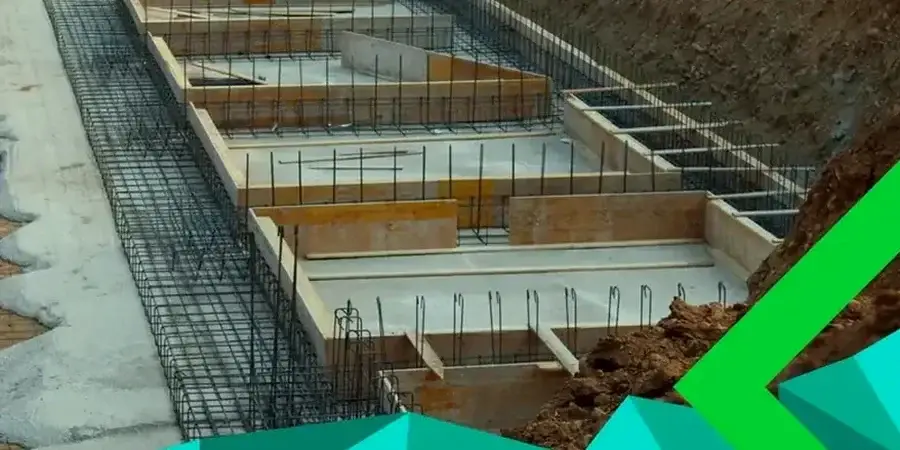
In Memphis, foundation engineering serves as the essential link between any structure and the region's difficult ground conditions. A well-designed foundation system must effectively transmit all structural loads—including dead, live, and environmental forces—into the subsurface soil and rock while addressing the specific geological dangers of the Mid-South. Whether for a single-family residence in East Memphis, a major commercial building in the downtown area, or an industrial facility along the Mississippi River, each project requires a foundation customized to the site, reflecting the varied strata that characterize Shelby County and its vicinity.
The local geology heavily influences foundation selection and behavior throughout Memphis, as the area lies within the Mississippi Embayment, where hundreds of feet of loose sediments, such as the Jackson Formation and the Memphis Sand aquifer, exist beneath the surface. Near the ground, engineers often encounter loess deposits covering much of the region—wind-borne silts that can remain nearly vertical when dry but suddenly cave in when wet. Below these loess layers, sequences of alluvial clays, silts, and sands deposited by the Mississippi River and its ancient channels occur in varying patterns. This layered and often unpredictable subsurface makes bearing capacity, settlement risk, and liquefaction potential vary significantly even across a single building lot, making comprehensive geotechnical investigation an absolute prerequisite for any foundation design.
Across Memphis, regulatory oversight for foundation design follows the International Building Code (IBC), which the Tennessee Board of Architectural and Engineering Examiners adopted and which is enforced with local modifications. The 2018 IBC, where Memphis-specific changes apply, sets rules for foundation design, including required embedment depths, reinforcement details, and limits on soil-bearing pressures. Chapter 18 of the IBC provides the basis for allowable stress design and load resistance factor design methods, while referencing ASCE 7 for determining wind and seismic loads. Seismic design categories are particularly critical locally—parts of Shelby County fall into Seismic Design Category D because of their closeness to the New Madrid Seismic Zone, demanding extra detailing for foundation components to withstand possible ground shaking and settlement from liquefaction.
The types of projects requiring professional foundation engineering span the full spectrum of construction in the Memphis market. Residential developments on expansive clay soils often necessitate engineered slab-on-grade systems with moisture conditioning and stiffened edge details. Mid-rise commercial structures in the Poplar Corridor frequently employ pile foundation design solutions when poor near-surface soils cannot deliver adequate bearing capacity without excessive settlement. Critical infrastructure—including bridges over the Wolf and Loosahatchie Rivers, water treatment facilities, and the FedEx World Hub expansion—demands deep foundation systems capable of resisting both static and dynamic loads. Even renovation and adaptive reuse projects in historic districts require foundation evaluations to ensure existing elements can support new occupancy loads while meeting current code requirements.
Located in the Mississippi Embayment, Memphis rests atop deep loose sediments that include collapsible loess, alluvial clays, and sands prone to liquefaction. These variable ground conditions, together with the region's proximity to the New Madrid Seismic Zone, pose major threats of differential settlement, bearing capacity failures, and ground deformation during earthquakes. A foundation designed specifically for the site addresses these risks to maintain structural stability and long-term performance.
Foundation design in Memphis adheres to the International Building Code (IBC), currently the 2018 edition with local modifications, as authorized by the State of Tennessee. Chapter 18 of the IBC addresses soils and foundations, specifying requirements for bearing capacity, settlement limits, and structural detailing. This code also references ASCE 7 for load calculations, including seismic provisions that account for the area's increased earthquake hazard classification.
Throughout Memphis, the prevalent thick loess and compressible alluvial soils often display low bearing capacity and high settlement potential, especially when moisture levels vary. When near-surface soils are insufficient for structural loads, deep foundations like driven piles or drilled shafts become necessary to carry loads down to stronger, deeper layers. Shallow foundations may work on engineered fills or where stiff clays are present at practical embedment depths.
The New Madrid Seismic Zone, roughly 40 miles northwest of Memphis, creates a substantial earthquake hazard that directly affects foundation design. Structures in higher seismic design categories must consider potential amplification of ground shaking, liquefaction of saturated sands, and lateral spreading. Foundation systems often require added reinforcement, deeper embedment, or ground improvement methods to preserve structural integrity during a design-level earthquake.