GEOTECHNICAL ENGINEERING
MEMPHIS

Geotechnical Engineering in Memphis

Technical studies that support your project.

LEARN MORE

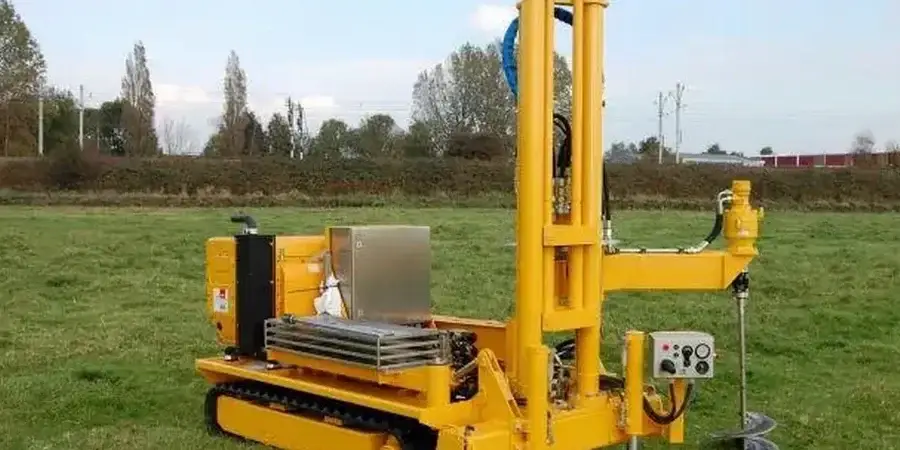
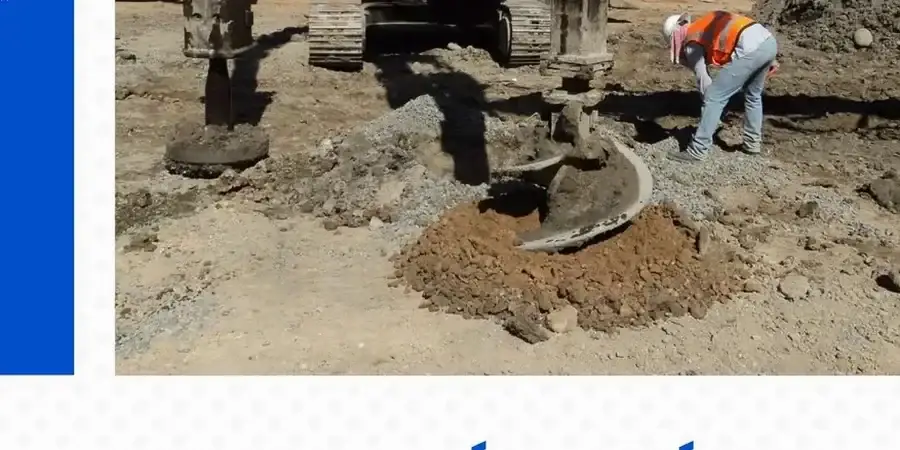
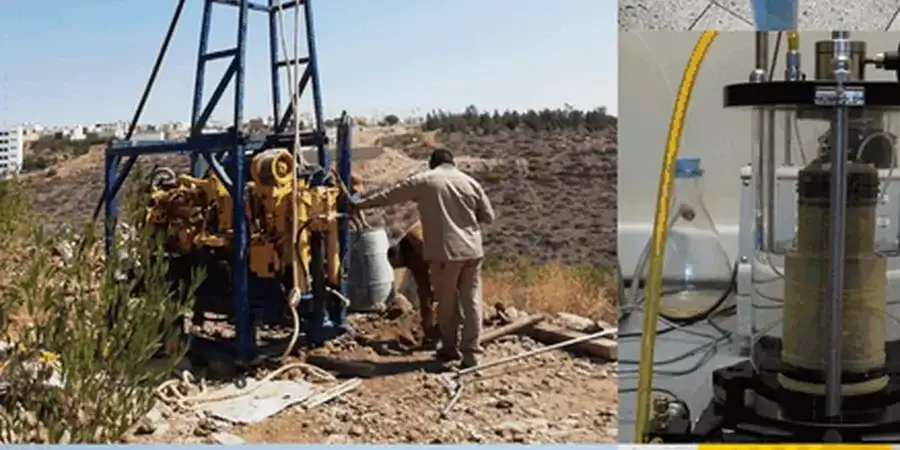
The Shelby tube sampler goes down, and you hear that distinct suction break when the piston retracts. That is the sound of a high-quality undisturbed sample being recovered from the Jackson Formation silts that underlie most of downtown Memphis. Our field crews work the Mid-South all year, and around here, the stratigraphy can shift from Pleistocene loess to Eocene clay within 15 vertical feet on the same site. A proper soil mechanics study is not just about running a set of index tests; it is about reconstructing the depositional story so the numbers make sense. We schedule drilling rigs to pull Shelby tubes and split-spoon samples, then run the full characterization in our accredited laboratory, following ASTM D1586 for field penetration and ASTM D2487 for classification. For projects near the Wolf River floodplain, we often combine the field campaign with a CPT test to capture continuous tip resistance and pore pressure dissipation, which feeds directly into the consolidation and shear strength program.

Loess collapse in eastern Memphis can produce differential settlements exceeding 4 inches under a 2,000 psf footing load if saturation occurs after construction.
Geotechnical Engineering in Memphis
Technical reference — Memphis

Our service areas

Local geology


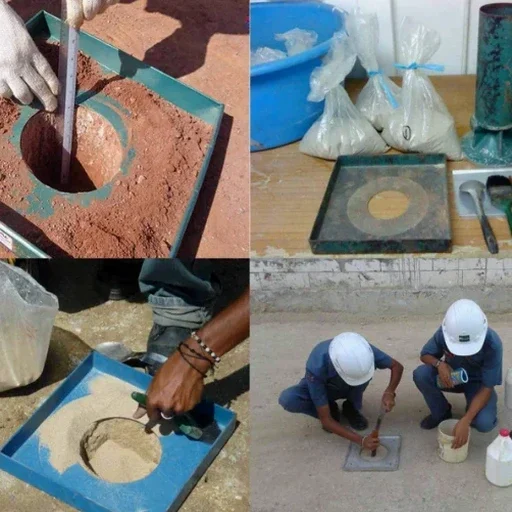
Memphis sits at an elevation of roughly 337 feet above sea level on the Fourth Chickasaw Bluff, overlooking the Mississippi River floodplain to the west. That bluff geology is dominated by wind-blown loess deposits that can reach thicknesses of 50 to 70 feet in parts of eastern Shelby County. Loess is metastable; it stands vertically in cuts but collapses rapidly when saturated and loaded. Our soil mechanics study quantifies that collapse potential through double-ring consolidometer testing and careful moisture-density control. We run standard Proctor curves per ASTM D698 to establish maximum dry unit weight, then evaluate shear strength under both drained and undrained conditions. In a single project cycle, we often process over 120 disturbed and 40 undisturbed specimens, logging moisture content, Atterberg limits, and grain-size distribution. When the subsurface profile shows interbedded sands below the loess, as it does along the Nonconnah Creek corridor, we recommend complementing the investigation with seismic refraction to map the bedrock depth and identify any paleochannel structures that could affect deep foundation performance.

Standards used

Reference standards for soils and foundations include ASTM D1586-18 (Standard Penetration Test and split-barrel sampling method), ASTM D2487-17 (soil classification per the Unified Soil Classification System), ASTM D4318-17 (tests for liquid limit, plastic limit, and plasticity index), ASTM D4767-11 (consolidated undrained triaxial compression test for cohesive soils), ASCE 7-22 Chapter 20 (site classification criteria for minimum design loads), and IBC 2021 Chapter 18 (soils and foundations provisions).

Need a geotechnical assessment?

Reply within 24h.

Email: contact@geotechnicalengineering1.org

Watch how it works

Why choose us

Long-period seismic waves are intensified by the Mississippi Embayment, and because Memphis lies atop a deep sedimentary basin, the ground can behave like a gelatinous mass during a New Madrid earthquake. Sand liquefaction occurred across the region during the 1811–1812 events, and modern geotechnical work must consider the recurrence of such phenomena. Our soil mechanics program features cyclic direct simple shear or cyclic triaxial tests on saturated sand samples taken from 15 to 45 ft depths, where liquefiable strata are most prevalent in Shelby County. The factor of safety against liquefaction is computed using SPT-based approaches from Youd and Idriss (2001), and outcomes are cross-referenced with IBC Chapter 18 and ASCE 7-22 site classification standards. Loess introduces an additional hazard: if misidentified as typical silty clay, heavy rainfall during grading can turn the entire pad into an unworkable slurry. Our geotechnical report explicitly notes these layers and prescribes moisture conditioning schedules suited to Memphis's humid subtropical climate, where annual rainfall averages over 53 inches.

Reference parameters

ParameterTypical value
Standard Penetration Test (SPT)ASTM D1586-18, split-spoon sampler, N-value correction for overburden and hammer energy
Soil classificationASTM D2487-17, USCS group symbol, visual-manual + lab validation
Atterberg limitsASTM D4318-17, liquid limit (Casagrande cup), plastic limit, plasticity index
Grain-size analysisASTM D6913/D7928, sieve + hydrometer, % passing No. 200 sieve
Moisture-density relationshipASTM D698-12 (standard Proctor), ASTM D1557-12 (modified Proctor)
Unconfined compressive strengthASTM D2166-16, undisturbed Shelby tube specimens, strain rate 1%/min
Consolidation parametersASTM D2435/D4546, incremental loading, Cc, Cr, cv, preconsolidation pressure
Direct shear / triaxialASTM D3080-11 (direct shear, saturated), ASTM D4767-11 (CU triaxial with pore pressure)

Top questions

How much does a soil mechanics study cost for a commercial building site in Memphis?

For a standard commercial lot in Shelby County, a comprehensive soil mechanics investigation—encompassing two to four SPT borings to 40 ft, Shelby tube sampling, and the full laboratory suite (Atterberg limits, grain-size analysis, Proctor compaction, consolidation, and triaxial testing)—falls within the US$3,220 to US$5,950 range. The exact price depends on the number of borings, depths, and whether cyclic testing is needed for liquefaction assessment.

What is the difference between an SPT boring and a Shelby tube sample for a Memphis soil mechanics study?

During SPT boring, a 140-lb hammer dropped 30 inches drives a split-spoon sampler, retrieving a disturbed sample and an N-value that relates to relative density and strength. The Shelby tube is a thin-walled steel cylinder hydraulically pushed into the soil to collect an undisturbed specimen that retains in-situ structure and moisture content. For Memphis loess, the Shelby tube is vital because collapse potential can only be determined on undisturbed material; a disturbed SPT sample loses its natural fabric, resulting in unconservative settlement predictions.

Do Memphis soil mechanics reports include liquefaction analysis for the New Madrid seismic zone?

Liquefaction potential assessment is a routine component of our reports for sites within the Mississippi Embayment. We employ SPT-based simplified procedures per Youd and Idriss (2001), utilizing magnitude and peak ground acceleration from USGS New Madrid seismic hazard maps. When saturated sands are identified between 15 and 50 ft deep, additional fines content and cyclic triaxial tests are performed to refine the safety factor. The report assigns an ASCE 7-22 site class and supplies liquefaction-induced settlement estimates for the design team.

Location and service area

We serve projects across Memphis and surrounding areas.

View larger map