GEOTECHNICAL ENGINEERING
MEMPHIS
HomeInvestigationCPT (Cone Penetration Test)

CPT Testing in Memphis: Reliable Cone Penetration Data for the Bluff City

Technical studies that support your project.

LEARN MORE

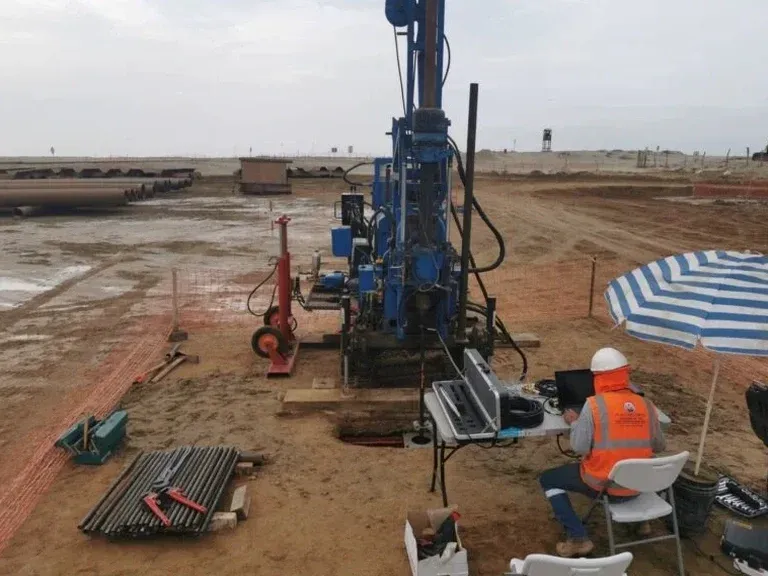
We have seen it too many times: a project team budgets for a cheap SPT-only investigation in downtown Memphis, then hits the Wolf River alluvium and gets unusable blow counts in soft silts. The result is a foundation redesign six weeks later and a six-figure change order. That gamble is unnecessary. A Cone Penetration Test provides continuous, repeatable data at every inch of depth—no sample disturbance, no lost recovery. When we run CPT rigs near the Mississippi River bluffs or out east toward Germantown, the pore-pressure readings and tip resistance profiles give our clients a subsurface picture that hammer-driven methods simply cannot match. For deep clays with embedded sand seams, that resolution makes the difference between a pile design that works and one that assumes too much. We pair CPT data with liquefaction analysis when the IBC site class suggests seismic risk, giving the structural engineer a defensible ground model from day one.

In Memphis loess, the friction sleeve sees the collapse-prone layer before the lab even gets the sample.
Our service areas

Scope of work

The Memphis metro sits on a layered stack of Pleistocene loess over Tertiary sands and clays, with Holocene alluvium dominating the Mississippi and Wolf River floodplains. Loess collapse upon wetting is a local concern that standard SPT N-values often miss, but the friction sleeve on our cone picks up the low lateral stress signature instantly. In the alluvial deposits south of I-240, a piezocone can resolve thin drainage layers that control consolidation time under embankment loads—a detail you cannot catch with a split spoon every five feet. We record tip resistance qc, sleeve friction fs, and pore pressure u2 simultaneously at 2 cm intervals, following ASTM D5778. The data feeds direct design correlations for shallow footings in the loess uplands and deep piles in the river bottoms. Every test is post-processed to correct for temperature drift and rod compression, then delivered as a digital log with soil behavior type charts ready for the project geologist.
CPT Testing in Memphis: Reliable Cone Penetration Data for the Bluff City
Technical reference — Memphis

Area-specific notes

On Union Avenue, a 10-story hotel design originally called for spread footings based on a desktop study assuming dense sand just 20 feet down. We deployed a CPT rig that uncovered 15 feet of soft, normally consolidated clay under a sand cap—earlier borings missed it because a plugged SPT spoon gave a false refusal reading. At 22 feet, tip resistance crashed below 5 tsf. Without CPT, the contractor would have dug footings, encountered the soft layer during proof-rolling, and then lost weeks redesigning with piles. In the Mississippi embayment, where soils can shift from loess to alluvium to Jackson Formation clay in just a few hundred feet horizontally, CPT data is hardly a luxury. It's the cheapest insurance against excavation surprises you can get.

Need a geotechnical assessment?

Reply within 24h.

Email: contact@geotechnicalengineering1.org

Standards used


Key standards and procedures referenced include ASTM D5778-20, IBC 2021 Chapter 18, ASCE 7-22, the NCEER/NSF liquefaction evaluation method (Youd et al. 2001), and AASHTO LRFD Bridge Design Specifications.

Reference parameters

ParameterTypical value
Cone capacity20-ton and 30-ton hydraulic rams
Measurement interval20 mm (ASTM D5778 continuous)
Parameters recordedqc, fs, u2, inclination
Maximum depthUp to 120 ft in local alluvium
Data deliveryDigital log + SBTn soil behavior type chart
Dissipation testingPore pressure equilibrium at specified depths

Top questions


What does a CPT test cost in the Memphis area?

For a standard CPT sounding to depths of 50–60 feet in Memphis, you can expect to budget between US$190 and US$250 per linear foot, covering the operator, cone rental, and a digital report. Deeper pushes, seismic add-ons, or dissipation tests push the cost toward the higher end. A two-rig day with piezocone profiles at four locations typically runs between $7,500 and $10,000. We deliver a fixed-price written proposal before mobilization to ensure no cost surprises.

Can CPT replace SPT borings for foundation design in Shelby County?

For many sites, especially in the thick alluvial deposits along the Mississippi and Wolf Rivers where continuous data beats intermittent SPT sampling, CPT is sufficient. It provides direct correlations for undrained shear strength, relative density, and constrained modulus. However, if you need lab classifications like Atterberg limits or grain-size distribution, we suggest pairing CPT with a limited set of mud-rotary borings to sample key layers. We can assist in designing a combined program that meets both geotechnical and permitting requirements.

How deep can a CPT rig push in Memphis soils?

Our 30-ton rig typically reaches 100 to 120 feet in the Jackson Formation clays and sands beneath the loess and alluvium. In the dense Pleistocene gravels near the Mississippi River bluff line, refusal may come sooner. We constantly monitor inclination and rod friction, stopping the push if rod bending becomes a risk. For most commercial projects in Memphis, the target depth is 60 to 80 feet, which is comfortably within our operational range.

Location and service area

We serve projects across Memphis and surrounding areas.

View larger map