GEOTECHNICAL ENGINEERING
MEMPHIS
HomeRoadwayFlexible pavement design

Flexible Pavement Design for Memphis Geotechnical Conditions

Technical studies that support your project.

LEARN MORE

Memphis sits on a complex foundation of Mississippi River alluvium and loess deposits that create unique challenges for pavement engineers. The subsurface across Shelby County typically consists of 15 to 30 feet of silty clay and sandy silt overlying the Jackson Formation, with groundwater often perched within the upper 10 feet during wet seasons. Designing flexible pavement here means confronting expansive soils, variable moisture regimes, and the freeze-thaw cycles that degrade underbuilt road sections within three to five years. Our team approaches every flexible pavement design by first characterizing the subgrade through a targeted field investigation — because the AASHTO 93 empirical method demands accurate resilient modulus values, not assumed ones. For projects near the Wolf River floodway or industrial corridors south of downtown, we often combine pavement design with CBR road testing to calibrate structural numbers against site-specific bearing capacity, ensuring the asphalt concrete and aggregate base layers perform across Memphis's seasonal extremes.

A flexible pavement section is only as reliable as the subgrade characterization beneath it — skip the resilient modulus testing in Memphis clay and you are designing blind.

Our service areas

Scope of work

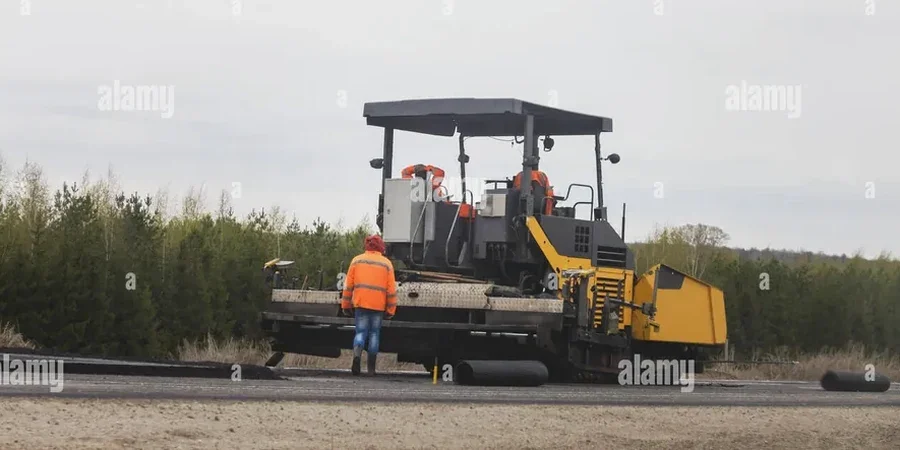
A recent warehouse expansion off Lamar Avenue illustrated the local conditions we work with daily. The site investigation revealed 8 feet of fat clay with plasticity indices exceeding 35, underlain by loose silty sand that saturated quickly after a 2-inch rain event. The owner had budgeted for a standard 4-inch asphalt section on 8 inches of crushed stone base, but our subgrade analysis showed that configuration would rut within two seasons under heavy truck loading. We redesigned the flexible pavement structure with a mechanically stabilized layer using geogrid at the subgrade-base interface, increased the aggregate base to 12 inches of dense-graded crushed limestone, and specified a polymer-modified asphalt binder to handle Memphis's summer pavement temperatures that routinely exceed 140°F at the surface. The structural number jumped from 4.2 to 5.8 under AASHTO 93 calculations, and the owner avoided the costly maintenance cycles that plague underdesigned pavements throughout the Mid-South. This type of site-specific optimization separates pavement engineering based on local materials and climate data from generic catalog solutions.
Flexible Pavement Design for Memphis Geotechnical Conditions
Technical reference — Memphis

Area-specific notes

Many Memphis parking lots we've examined experienced pavement failure within three years because designers overlooked the shallow perched water table, which lies merely 4 to 6 feet underground. During winter, the subgrade remains nearly saturated, causing the resilient modulus to fall by 40 to 60 percent relative to summer conditions, making the pavement structure deflect beyond the asphalt's fatigue endurance. The resulting failure is predictable: alligator cracking initiates at the bottom of the asphalt concrete, moves upward, and after one additional freeze-thaw cycle, the surface deteriorates into potholes. Another frequent issue is differential heave at transitions from cut sections to fill over Memphis loess, due to the moisture sensitivity of these silts generating swelling pressures that standard pavement sections cannot resist without a properly designed transition zone. The solution demands drainage design integrated into the pavement section from the start, not added later.

Need a geotechnical assessment?

Reply within 24h.

Email: contact@geotechnicalengineering1.org

Standards used


The following standards are employed: AASHTO's 1993 Guide for Pavement Structure Design, the AASHTO Mechanistic-Empirical Pavement Design Guide, ASTM D2487 for soil classification, ASTM D6938 for field density and moisture testing, and ASTM D1883 for California Bearing Ratio determination.

Reference parameters

ParameterTypical value
Design MethodologyAASHTO 93 and MEPDG (Mechanistic-Empirical Pavement Design Guide)
Subgrade CharacterizationResilient modulus (Mr), CBR, soil classification per ASTM D2487
Typical Memphis Subgrade Mr Range3,000 - 8,000 psi for fat clays; 8,000 - 15,000 psi for silty sands
Asphalt Binder GradePG 64-22 to PG 76-22 depending on traffic level and depth
Base Course MaterialsCrushed limestone (GDOT/AASHTO M147) or cement-stabilized aggregate
Design Traffic (ESALs)Project-specific, typically 10^5 to 10^7 for local roads
Freeze-Thaw ProtectionBase drainage layer and non-frost-susceptible subbase where needed
Quality Control TestingNuclear density gauge per ASTM D6938, asphalt content by ignition oven

Top questions


What subgrade conditions in Memphis most affect flexible pavement performance?

Subgrade conditions in Memphis are dominated by high-plasticity clays and silts from the Mississippi River floodplain. These soils exhibit pronounced swell-shrink behavior with seasonal moisture variations and rapidly lose strength when saturated. The perched water table, often encountered between 5 and 8 feet below surface across much of Shelby County, keeps the subgrade persistently moist during winter and spring, halving the effective resilient modulus compared to summer values. To counter this, our designs incorporate enhanced drainage, subgrade stabilization, or a thicker structural section, depending on the in-situ soils' plasticity index and grain size distribution.

How does AASHTO 93 differ from the MEPDG approach for Memphis pavements?

The AASHTO 93 design method relies on an empirical equation derived from the AASHO Road Test, employing the structural number, traffic in 18-kip ESALs, and a single subgrade resilient modulus. While straightforward, it does not directly incorporate Memphis-specific climatic influences or material variability. In contrast, the Mechanistic-Empirical Pavement Design Guide (MEPDG) simulates pavement response using local hourly temperature and precipitation data, forecasting distresses such as rutting, fatigue cracking, and thermal cracking over the design life. For Memphis's high-traffic corridors, MEPDG yields a more refined design, potentially justifying thinner pavements where AASHTO 93 is overly conservative, or thicker pavements where the empirical method fails to capture critical failure modes.

What does flexible pavement design cost for a commercial project in Memphis?

Our flexible pavement design works for a standard commercial development in the Memphis area—like a retail parking lot or warehouse road—carry a fee between US$1,640 and US$5,630. The cost varies with project scope, number of required borings or test pits, and whether MEPDG analysis is included. This fee encompasses field investigation, laboratory testing for subgrade characterization, structural section design computations, and a sealed engineering report along with construction specifications.

How do you account for heavy truck traffic on Memphis industrial pavements?

For industrial pavements at distribution centers and intermodal facilities in Memphis, traffic characterization must go beyond standard passenger car equivalents. We apply AASHTO load equivalency factors to convert the projected mix of single-unit trucks, tractor-semitrailers, and container chassis into 18-kip equivalent single axle loads (ESALs). At locations near Memphis International Airport or the BNSF intermodal yard, where daily heavy truck counts often exceed 500, we typically design for a traffic life of 20 to 30 years. To resist rutting from sustained loads during high summer temperatures, we specify polymer-modified asphalt binders with higher performance grades.
Location and service area

We serve projects across Memphis and surrounding areas.

View larger map